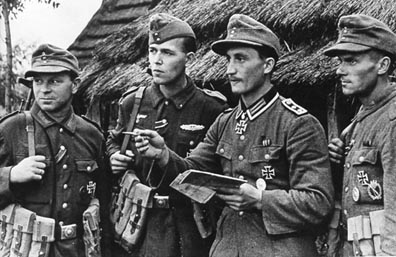
| Type 2 MP44 Pouches |
| For most collectors and enthusiasts, these are considered the iconic MP44 pouches, thus being the most sought after. I’m referring to those made from tan linen canvas which I call “Type 2’s”. Again, note that this is my made up term, not an official German or collector designation. |
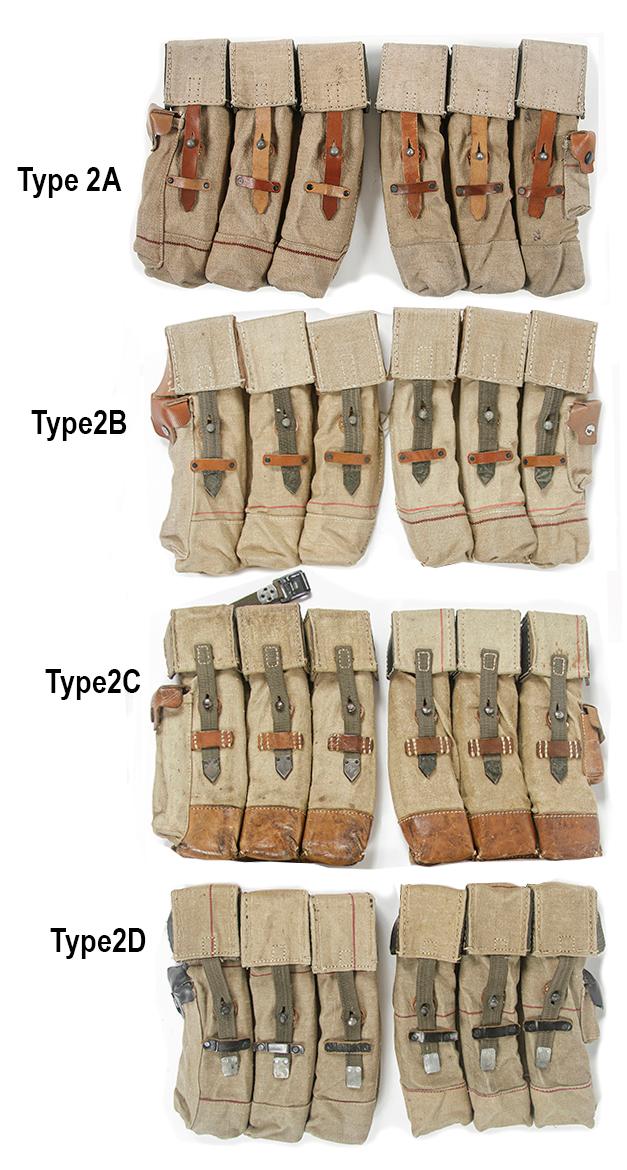
As with the Type 1’s, I assigned letters to identify the most noticeable manufacturing variations.
A’s use leather closure straps, B’s use web ones, C’s have leather reinforced bottoms, and D’s use web closures with square rather than pointed metal tips. All except A’s use web closure straps.
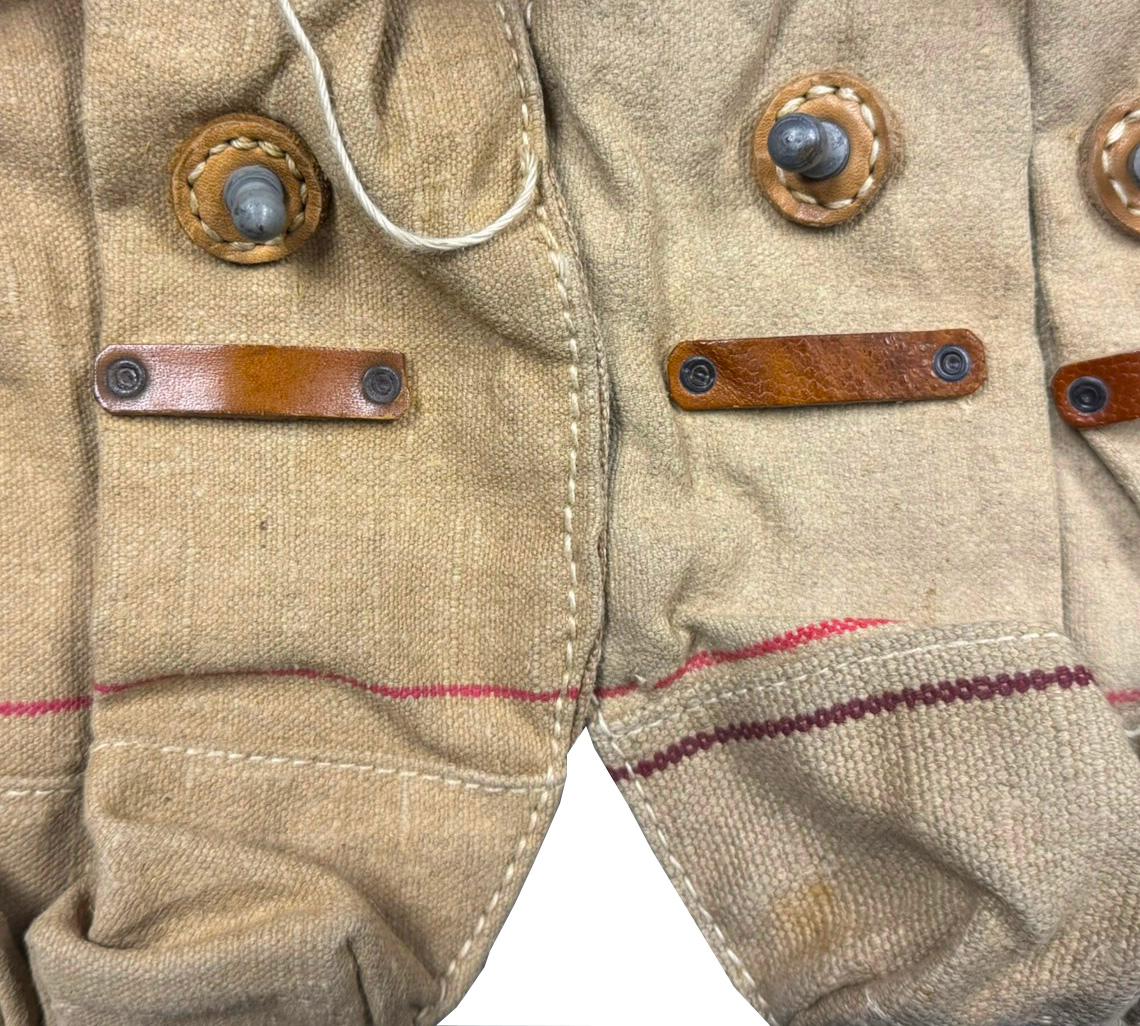
The tan canvas: The fabric is linen canvas, likely from Belgium as that was and still is the primary supplier of such cloth. It’s been used for feed sacks, clothing and furniture for over a century.
When we contracted our fabric, the rep we dealt with remembered one of the “old timers” mentioning to him when he started at the company in the 1980’s that the German military had been very good customers who would periodically show up and buy out their entire inventory.
Most, if not all original pouches I have handled or viewed were made using several different weaves and shades of this canvas, with the flaps often being a notably lighter weight fabric. Note the 3 clearly different cloths in the photo above.
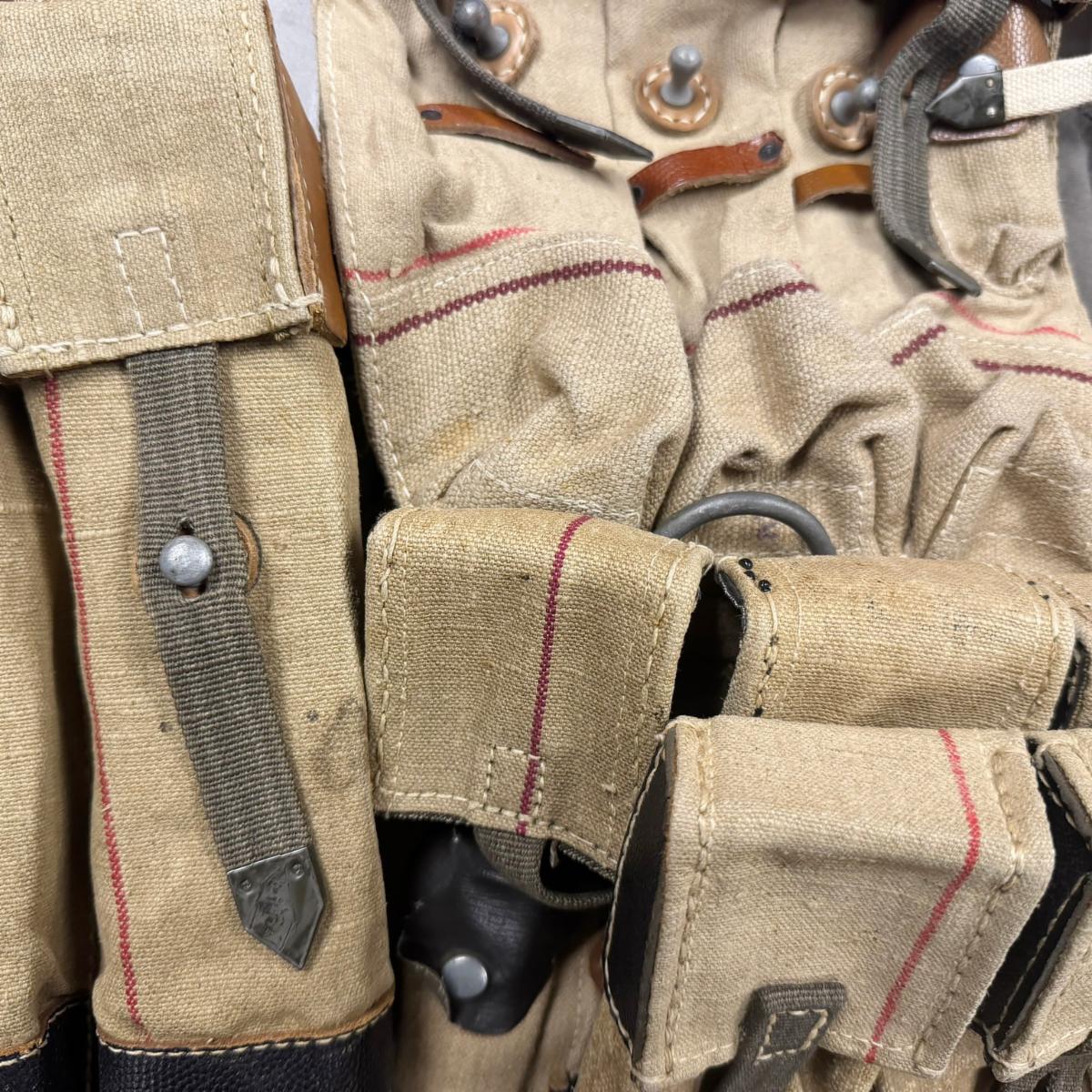
The lines: Many collectors obsess over the colored lines. These were woven at various intervals into the cloth, typically in shades of red or burgundy, with the width, number of colored yarns and pattern varying. The fabric was often made to be used for sacks of one sort or another and the lines helped the people sewing the items together to keep the seams aligned. They had zero military significance.
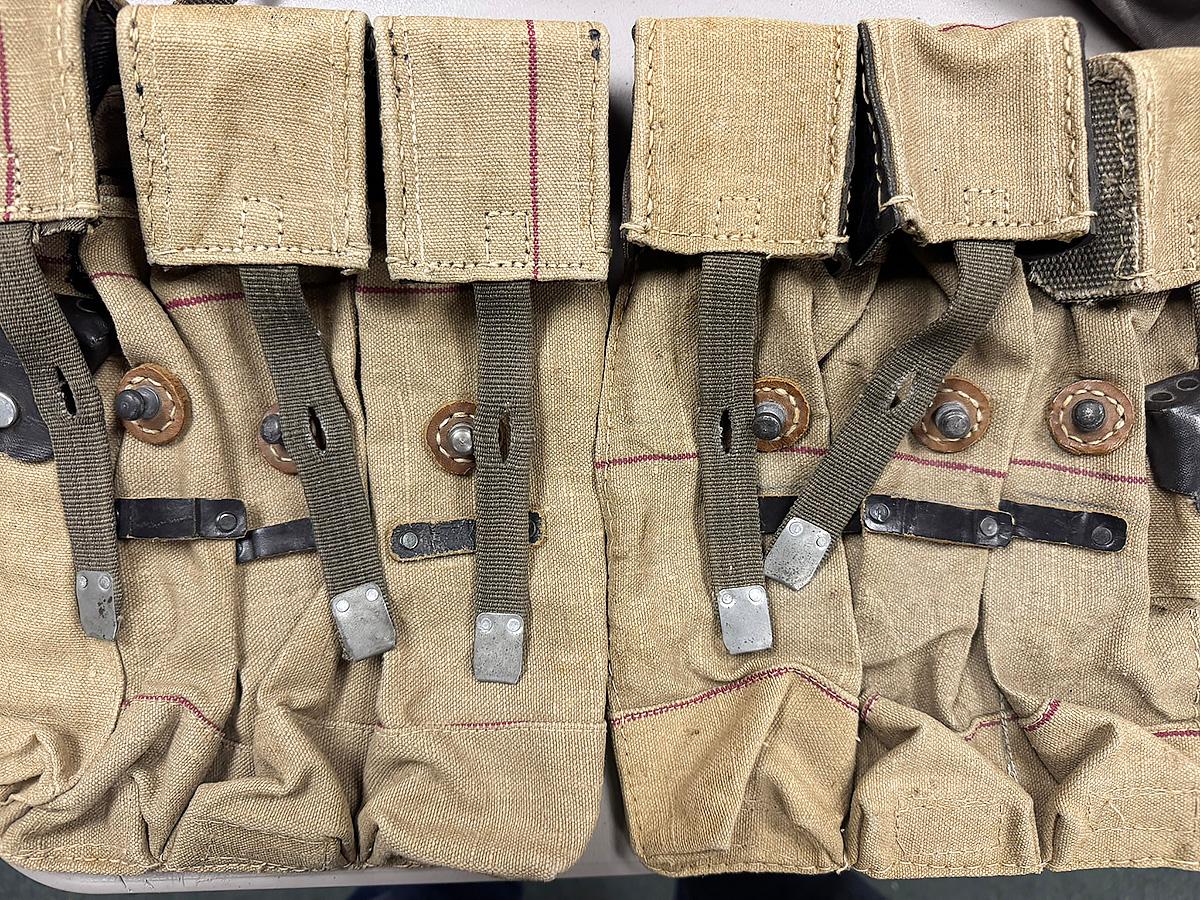
Unique Webbing: The other next distinctive feature of most original pouches are the web closure straps. It’s usually a shade of gray, 16mm wide with holes for the studs woven in the fabric rather than sewn like buttonholes.
When examining any pouch, woven holes are a near guarantee that it is original.
We’re the only repro company that I have ever encountered that made these- however, as I was unable to leave an original with the mill, the weave of ours isn’t quite identical to the authentic ones and it’s not hard to distinguish.
Most manufacturers used the pointed metal tips, often made by LUX, while occasionally one encounters the rectangular, riveted type.
Of interest, MP40 pouches with web straps have stitched holes- in total contrast to the straps on MP44’s.
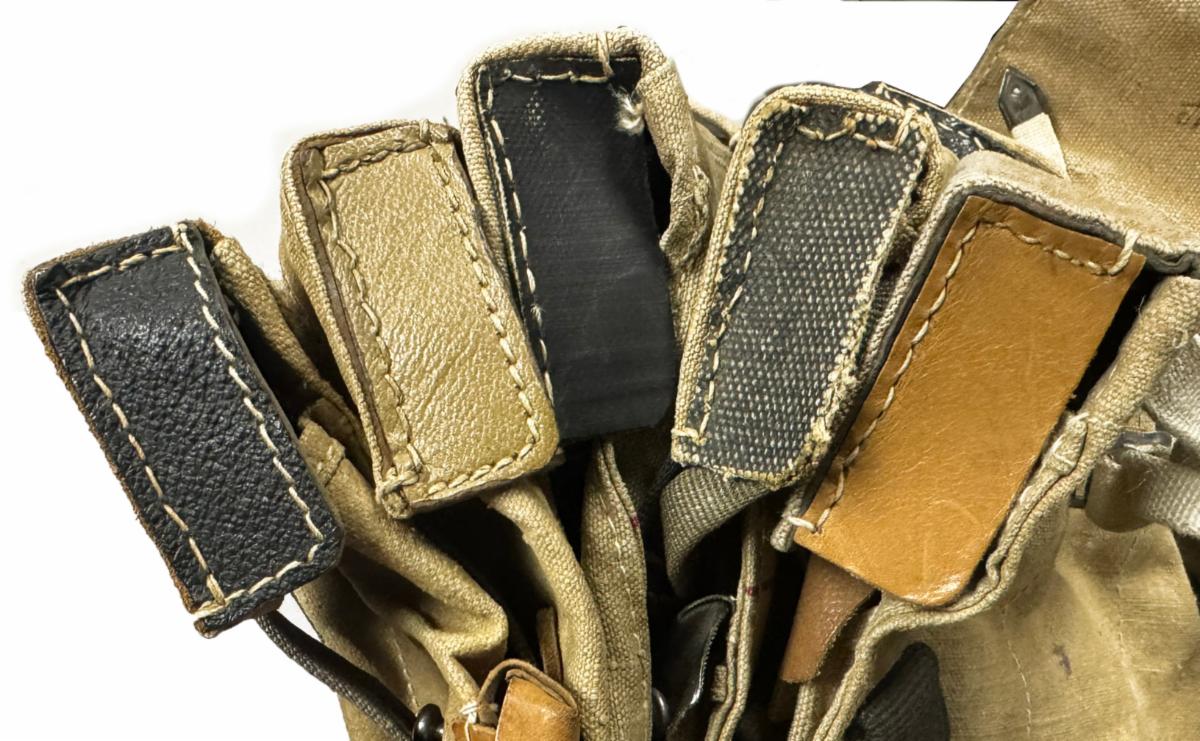
Flap Sides: The material used on the sides of the flaps could be made from leather, Pressstoff (artifical leather), heavy canvas or….American rubber. See below.
Note that only Pressstoff is stitched all the way around the 4 sides- this was due to it’s tendency for the layers to separate otherwise.
There are a few very late models with flaps sides made from the same canvas as the pouches. The flaps were cut in 2 layers, more or less in a “T” shape, then folded and sewn to create the box top.
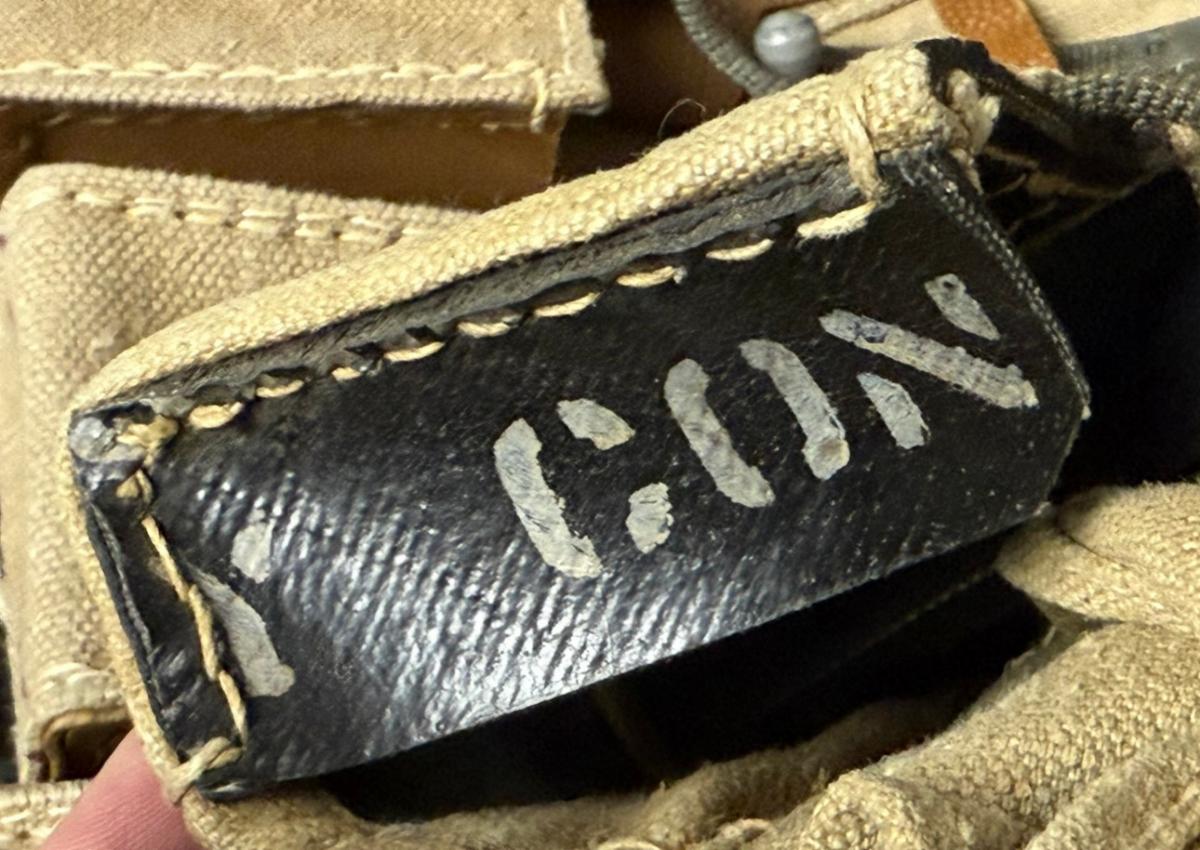
The über thrifty Germans- last year we were able to determine that the rubber typically found on Type 2 D pouches came from the resealable fuel tanks recycled from downed Allied aircraft.
A shovel carrier was found with enough of the nomenclature to determine this. Thus, “CON” is not for “Continental” (the German rubber firm) but rather it’s “CONTRACT”.
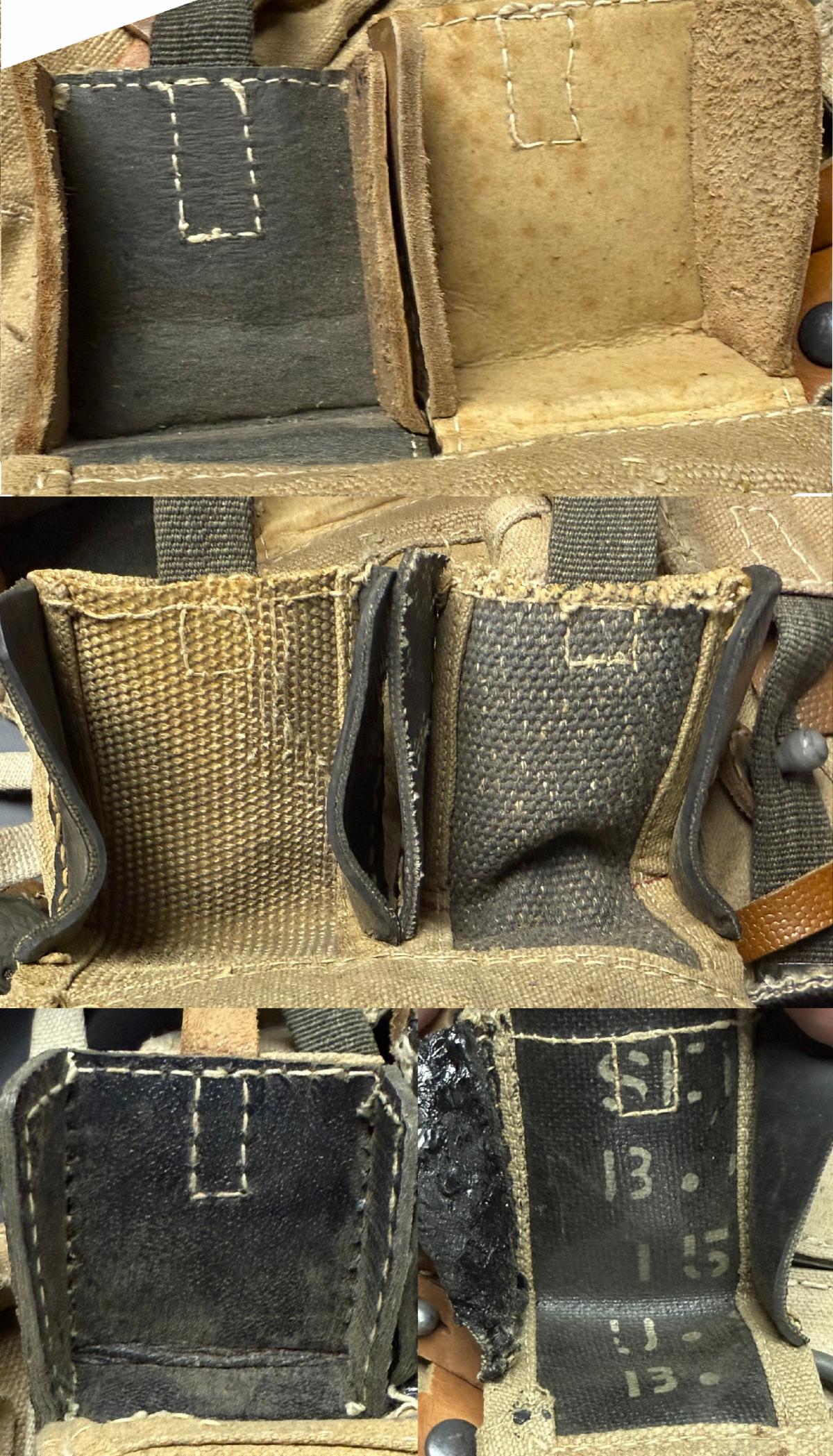
Flap Lining: The inside of the flaps was reinforced with a veritable cornucopia of materials. One may find leather, split leather, pigskin, heavy canvas, book cloth or even more “airplane rubber”.
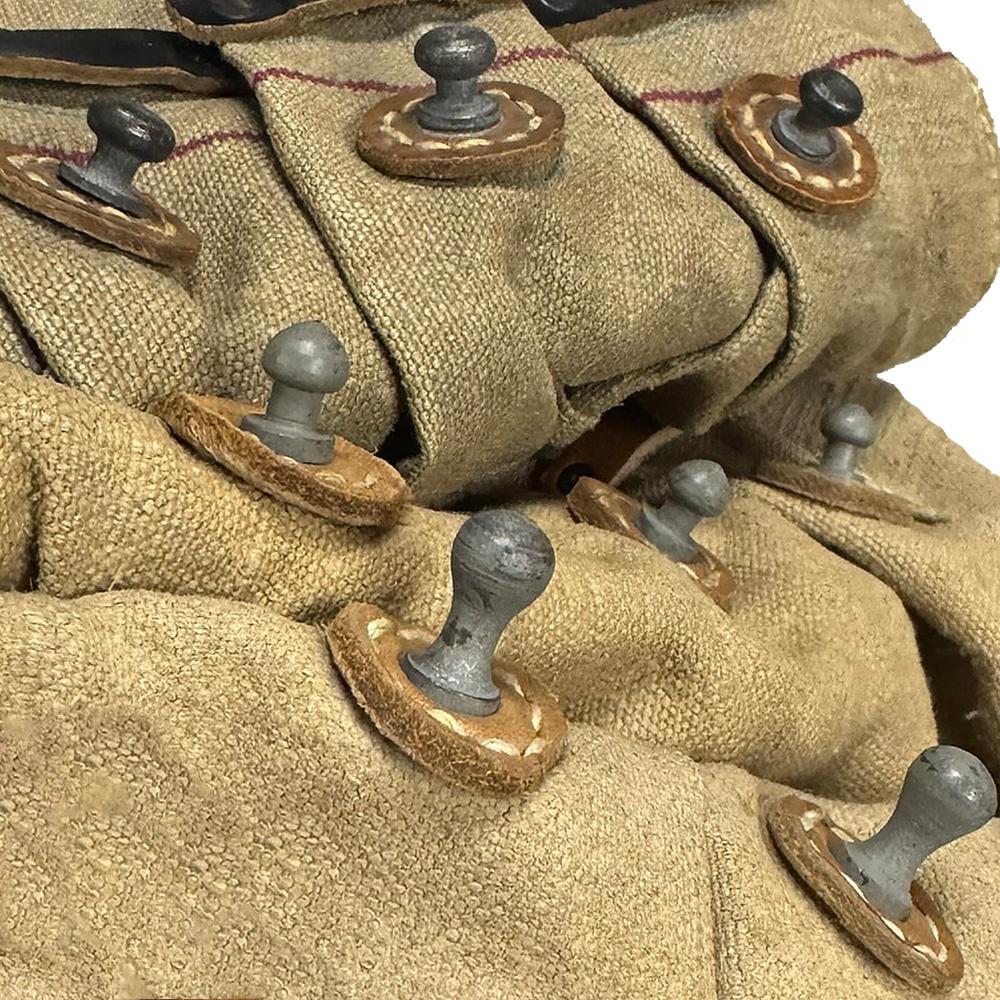
Studs: The the height and shape of the heads on the metal studs used to secure the flaps varied as well. Even on matching pairs or sometimes even a single pouch, one can find studs with very different shapes.
The leather disc used to attach the studs was usually brown leather, made from one thick piece (or occasionally 2 thinner layers) of leather.
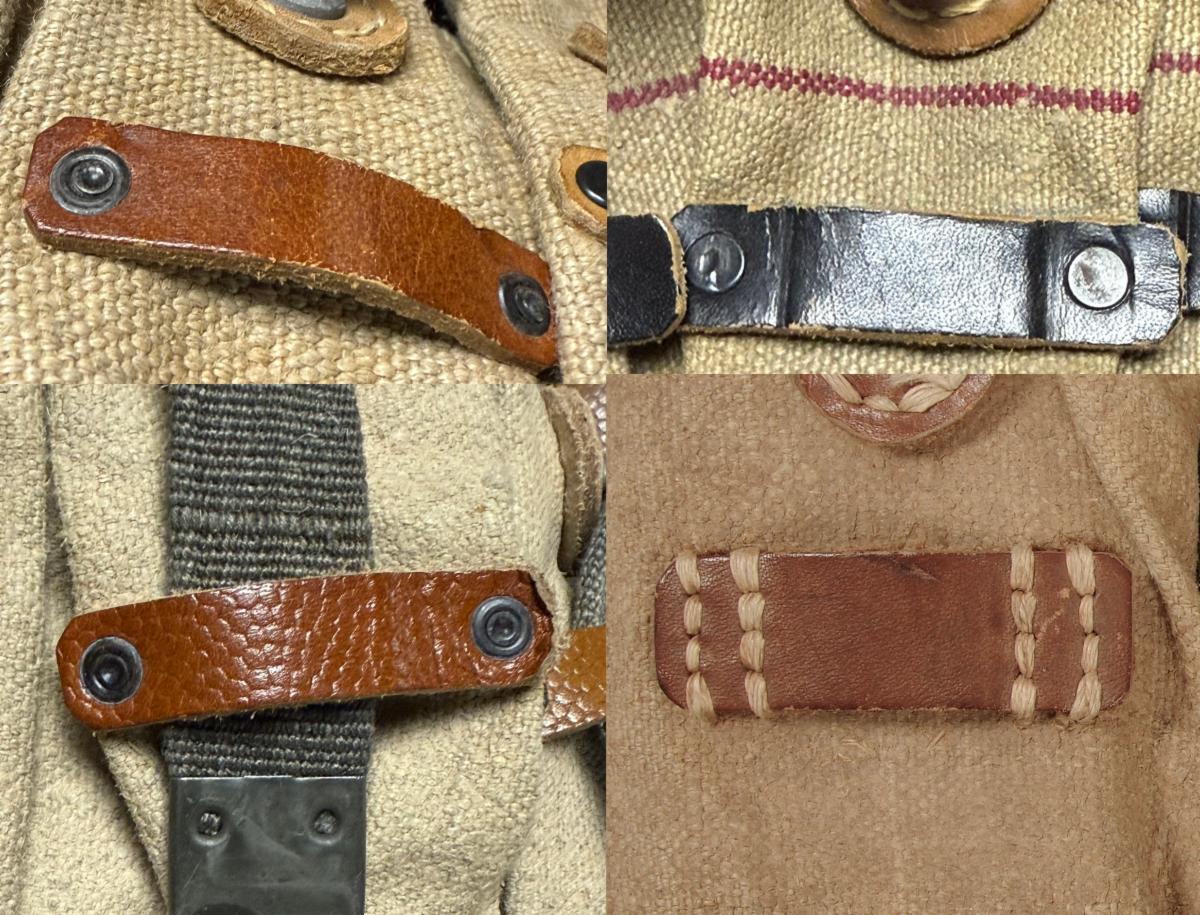
Closure Loops: Another identifying feature of certain manufacturers is the width and means of attachment of the closure loops. Some firms like cea and ros used narrow, 12mm loops while others like jwa used the same 16mm width like the closure straps.
Rivets were used by cea, while ros and jwa stitched theirs on. The firm fuq stitched some and riveted others.
Black or brown leather in both smooth and pebbled finishes were used.
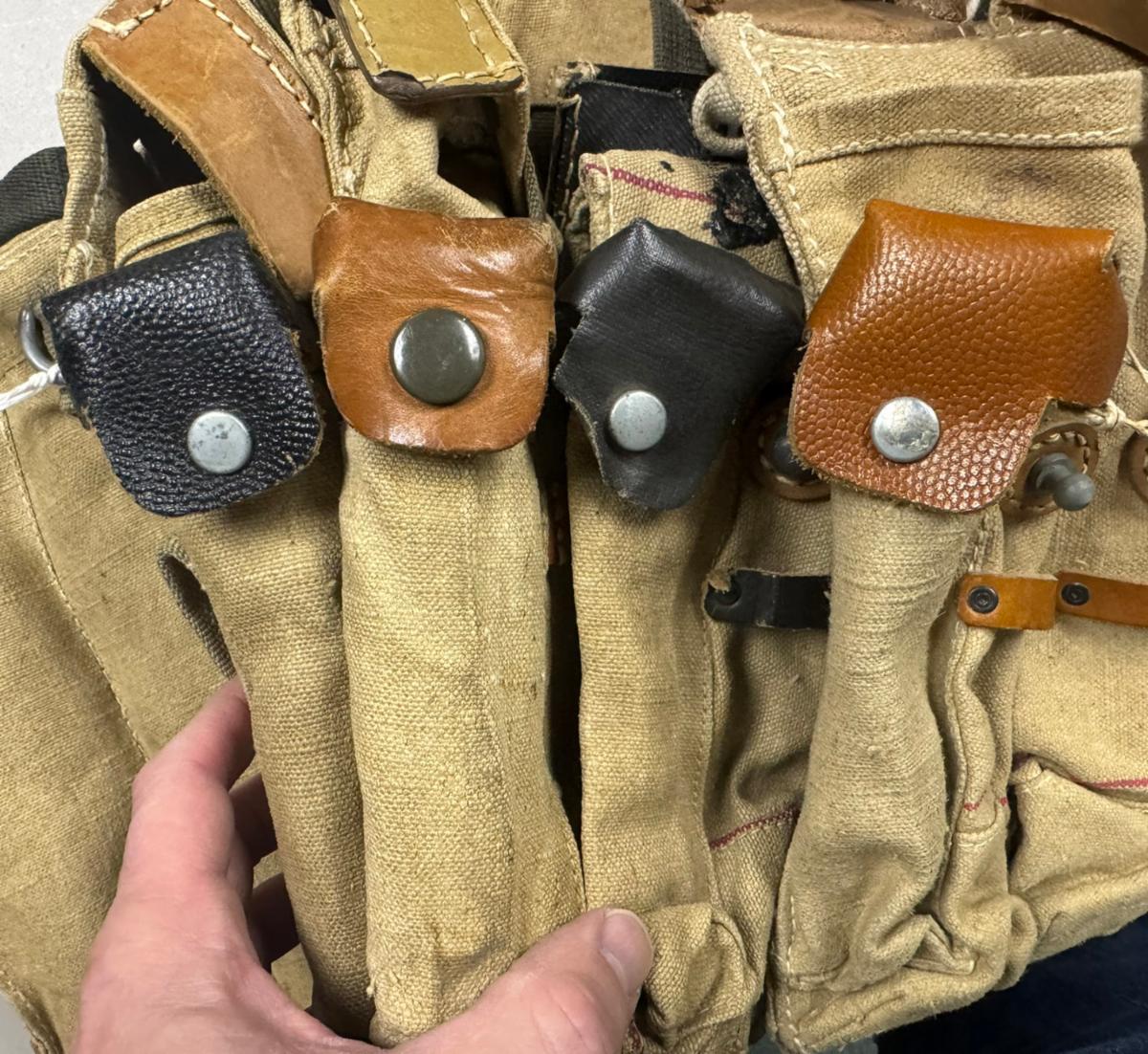
Accessory Pouch Flaps & Snaps Caps: The flaps on the side pockets for the loader tool and spare parts vary widely. The were made from leather or coated canvas, in black or brown, in both pebbled and smooth finish.
I wouldn’t be the least surprised if other materials or colors turn up.
The caps on the snap sockets can be painted black or gray, or simply left unfinished. Likewise, the size of snap varied.
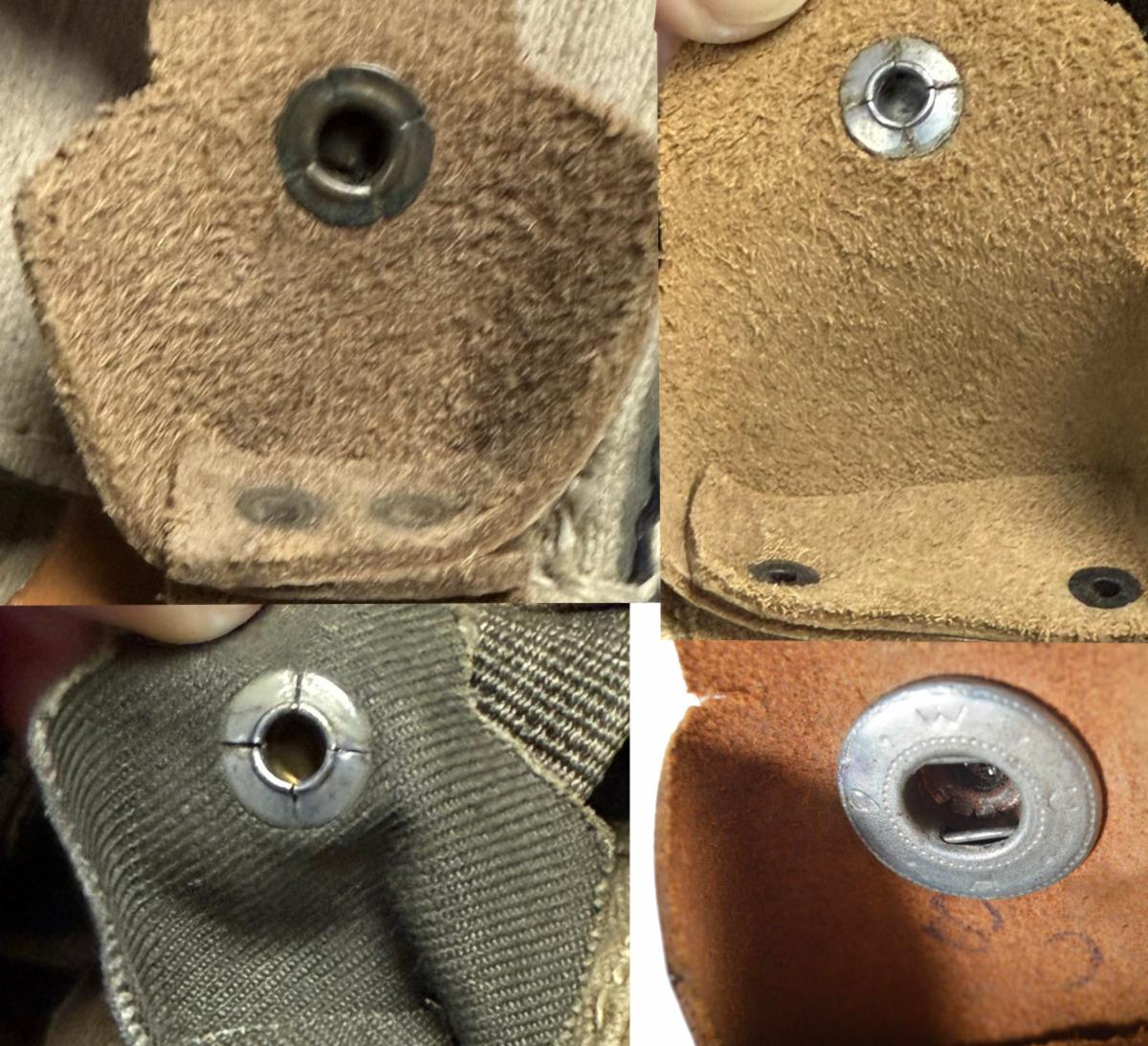
Snaps: Not surprisingly, the Germans appear to have used just about any type of press snap they had on hand for these pouches. Both segma and double wire snaps can be found, in steel, zinc and even brass.
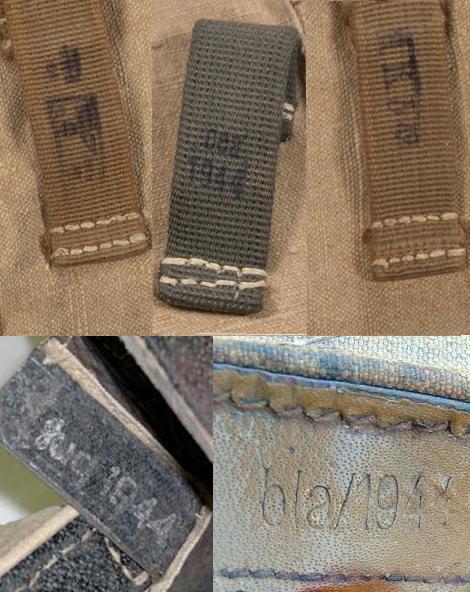
Makers & Markings: The markings on MP44 pouches can be very difficult to see, and it’s not uncommon for them to be devoid of any marks. As shown above, both ink and steel stamps were used, and if one is lucky to find marks it’s typically a 3 letter code and year.
Note that I have never, ever seen an original pouch (of any model) marked with any weapon designation other than “Mkb42”- but it’s very unusual on Type 2’s. The only ones I’ve encountered with MP44 or STG44 on them were fakes.
As for who made what: A’s appear to have been made by “cea” (H. Thiel, Dresden), and D’s by an unknown manufacturer as to date, I have never seen any with maker marks.
In contrast, B’s were made by a number of firms, including bla, cea, jwa, ros, and likely others. As for D’s I’ve seen them made by bcb and jwa (shown).
Note that most makers have their own specific quirks that allows one to identify them even if no markings are visible.
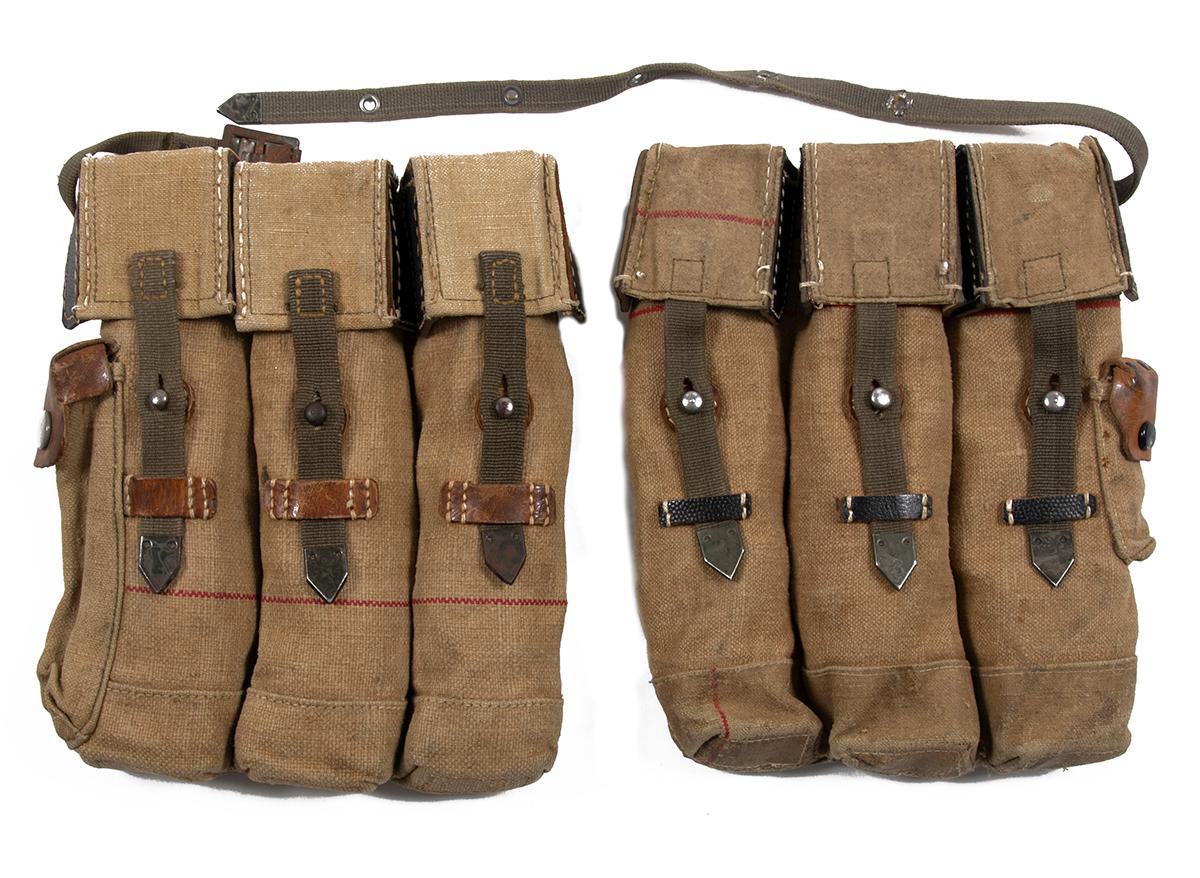
History Fail! One thing that would send some living historians to therapy is the fact that some troops ended up with mis-matched pairs of magazine pouches or other times just one. There is a clear photo of an LAH Flak NCO in Russia (can’t find it off hand) wearing one leather and one canvas MP40 pouch, and many other WWII photos show troops wearing with singles.
Photos of MP44 pouches in use are incredibly rare, but I have encountered 2-3 pairs of vet-bring back MP44 pouches that are from two different makers, but where clearly worn together.
That’s most of what I think I’ve figured out over 20 years of hoarding, perving on and making MP44 pouches. Like many expensive items of militaria, fakes abound, but it’s not usually that difficult to determine which is which.